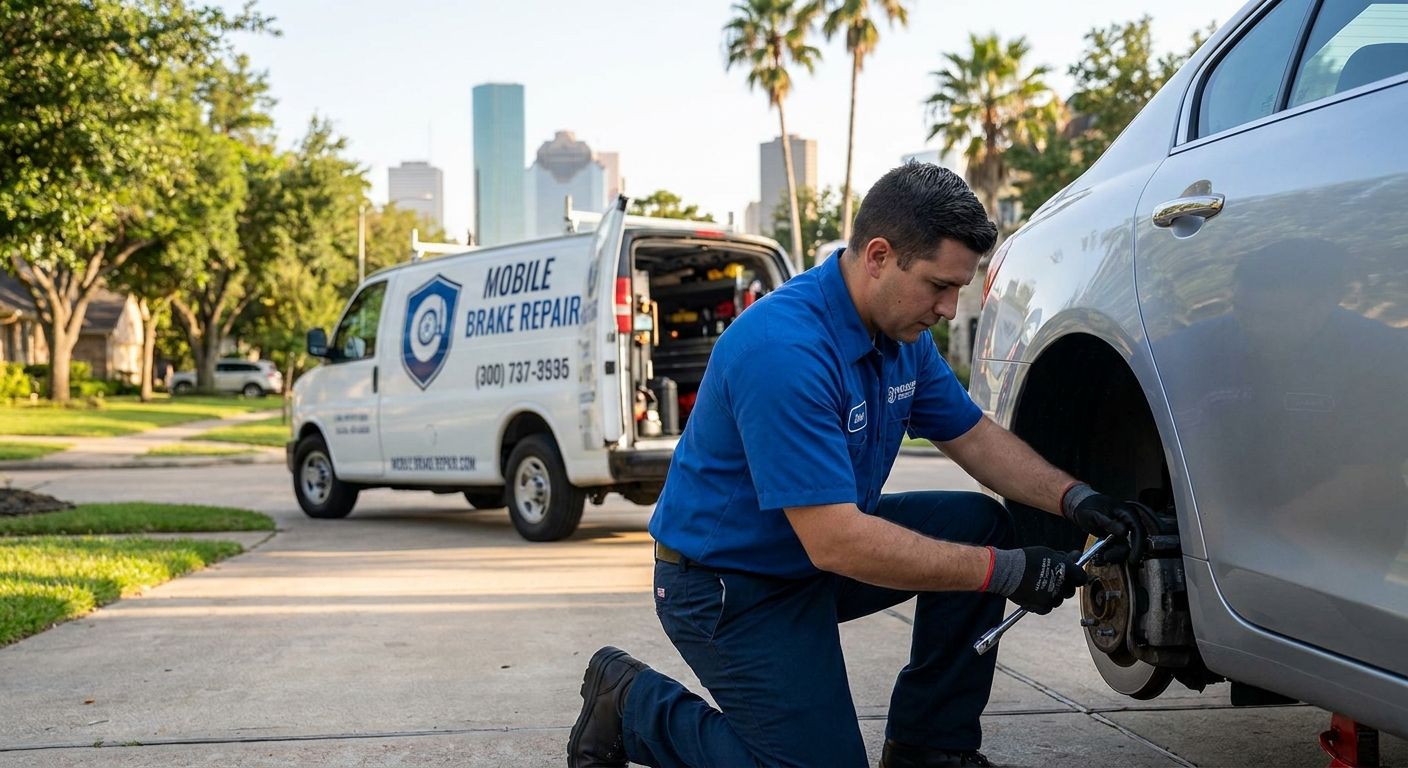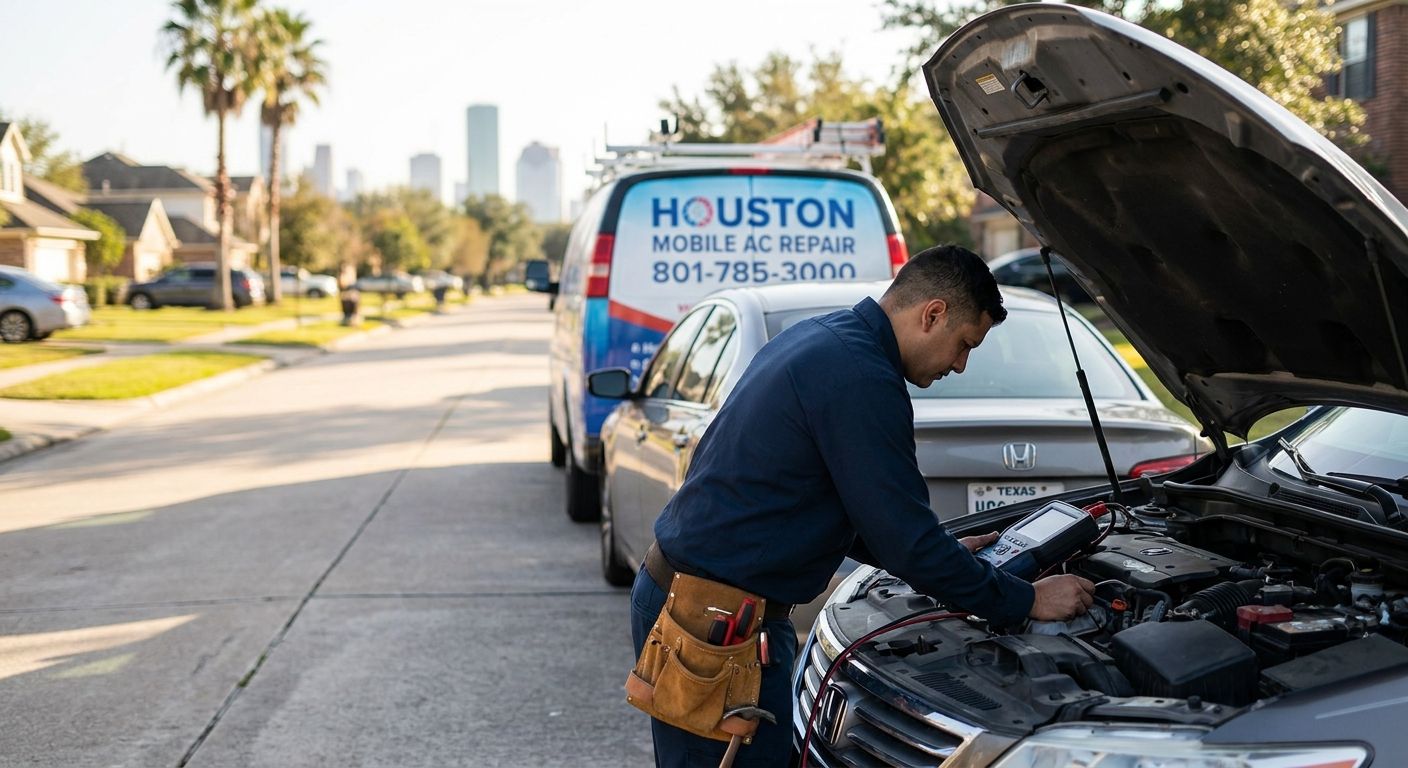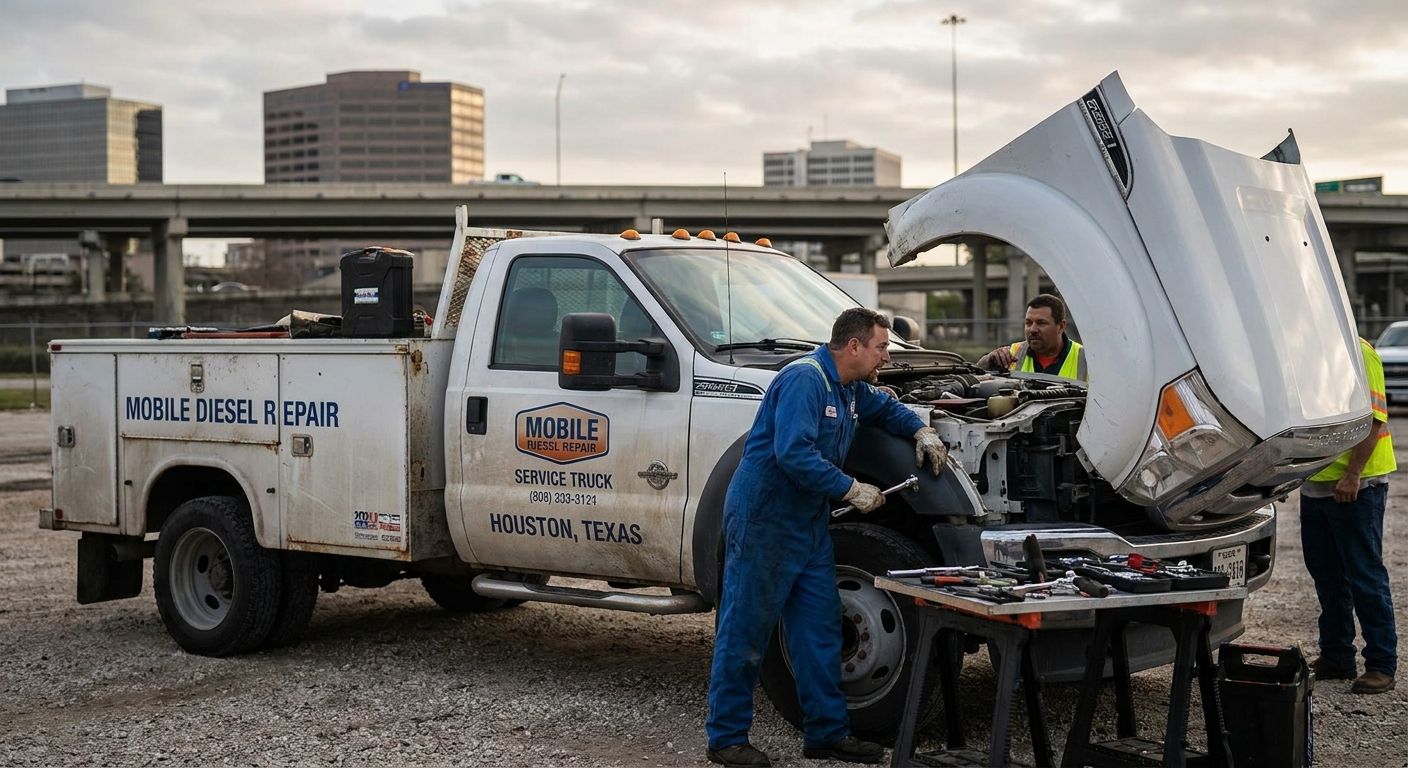
Best mobile diesel mechanic houston in 2026 comes down to a simple question: can the repair happen where the truck sits, or does the truck have to move first? This guide ranks the five types of diesel repair providers working the Houston area right now — on-site mobile mechanics, dealership bays, independent shops, fleet contract providers, and roadside towing networks — so owner-operators and fleet managers know exactly who to call before the truck is stranded.
- Houston Mobile Mechanic wins for on-site diesel repair anywhere inside the 50-mile Houston radius, 24/7.
- Dealership diesel departments still own warranty claims and manufacturer software resets for Duramax, Power Stroke, and Cummins engines.
- Independent shops handle full engine rebuilds and machine work a mobile unit physically can't do curbside.
- Fleet contracts make sense past five or six trucks; below that, on-demand mobile dispatch costs less friction in 2026.
Why this matters
Houston runs on diesel. Port Houston drayage trucks, refinery service fleets, construction rigs, and ranch equipment are spread across a city that spans roughly 655 square miles, plus the surrounding counties where most of that equipment actually works. A dead alternator on a Duramax at a job site in Baytown doesn't get fixed by driving to a shop in the Heights — it gets fixed where it broke, or it gets towed, and towing a heavy diesel truck is expensive and slow.
That's the fork every Houston diesel owner hits: repair on-site, or move the truck. This list is built around that fork, not around brand loyalty. Getting a mobile mechanic service dispatched to the site is one branch; the other four branches cover everything else, including when mobile dispatch is the wrong call.
What makes the best mobile diesel mechanic in Houston
- Response time inside the service radius — dispatch that reaches the truck within a workable window, not a next-day appointment
- Diesel-specific diagnostic gear — scan tools that read J1939 heavy-duty protocol, not just passenger-car OBD-II
- DPF, EGR, and fuel system capability — the repairs that actually strand diesel trucks, handled without a tow
- True 24/7 availability — diesel breakdowns don't wait for business hours, especially on overnight freight runs
- Fleet account options — flat-rate dispatch or standing service agreements for operators running more than a handful of trucks
- Upfront quoting before the truck rolls out — a price range before dispatch, not a surprise invoice after
Diesel repair providers in Houston: at a glance
| Provider type | Best for | Standout feature | Key limitation |
|---|---|---|---|
| Houston Mobile Mechanic | On-site emergency diesel repair | Dispatch anywhere in the 50-mile Houston radius, 24/7 | Can't do machine-shop rebuild work in the field |
| Dealership diesel service departments | Warranty and software-covered work | Manufacturer-specific reflashes and recall fixes | Appointment-based, not built for roadside emergencies |
| Independent diesel shops | Full engine rebuilds and machine work | Bore, hone, and crank-grinding capability on-site at the shop | Truck has to be towed in first |
| Fleet maintenance contract providers | Multi-truck operations | Scheduled PM and DOT inspection cycles across a roster | Overkill and costly for one or two trucks |
| National 24/7 roadside assistance networks | Tow-and-go breakdowns | Wide dispatch network, works with any make | Tows the problem instead of fixing it |
1. Houston Mobile Mechanic: best for on-site emergency diesel repair
Houston Mobile Mechanic sends a technician to the truck instead of the other way around, covering the Houston metro and a 50-mile radius beyond it. Dispatch runs 24/7, which matters for diesel breakdowns that don't clock out at 5 p.m. — a stalled reefer truck at 2 a.m. still needs a technician, not a voicemail.
Houston Mobile Mechanic pros:
- On-site diagnostics for starting, charging, and fuel-delivery faults
- 24/7 dispatch inside the 50-mile Houston service area
- No tow needed for most alternator, starter, sensor, and fuel-system jobs
- Works for single trucks and small fleets without a standing contract
Houston Mobile Mechanic cons:
- Not equipped for full engine teardown or block machining in the field
- Catastrophic failures (spun bearings, cracked blocks) still require shop transport
- Service radius stops at 50 miles, so far-edge counties fall outside coverage
Best for: a truck that's down at a job site, a warehouse dock, or the shoulder of I-10 and needs a fix without a tow bill on top of the repair bill.
Verdict: Buy. For anything short of a full engine rebuild, dispatching a mobile diesel mechanic saves the tow and the downtime.
2. Dealership diesel service departments: best for warranty and software work
Dealership service bays are the right call when the repair is covered under a manufacturer warranty or requires a factory reflash — emissions recalls, ECM updates, and Cummins, Duramax, or Power Stroke software resets typically have to run through dealer-level diagnostic equipment.
Dealership diesel service pros:
- Warranty claims get processed correctly, first time
- Access to manufacturer software updates and recall campaigns
- Factory-trained technicians for brand-specific quirks
Dealership diesel service cons:
- Appointment scheduling, not built for same-day breakdowns
- No on-site dispatch — the truck has to get there
- Labor rates typically run higher than independent shops
Best for: trucks still under manufacturer warranty or flagged for a recall.
Verdict: Buy for warranty and software work, Skip for anything urgent.
3. Independent diesel shops: best for full engine rebuilds and machine work
Once a diesel engine needs a real teardown — crankshaft grinding, cylinder boring, a full head rebuild — that work happens on a shop floor with machine tools, not curbside. Some Houston fleet operators also turn to sourcing replacement diesel engine assemblies for fleet replacement instead of rebuilding a badly damaged block piece by piece, especially when downtime costs more than a swap.
Independent diesel shop pros:
- Machine-shop equipment for boring, honing, and crank work
- Flexibility on parts sourcing, including rebuilt or reman engines
- Often cheaper labor rates than a dealership for the same rebuild scope
Independent diesel shop cons:
- Truck has to be towed or trailered to the shop first
- Turnaround on a full rebuild can run days to weeks
- Quality varies more shop to shop than at a franchised dealer
Best for: engines with internal damage that a scan tool and a wrench in the field can't touch.
Verdict: Hold until diagnostics confirm the damage is internal — a lot of "engine" complaints are actually fuel or electrical faults a mobile mechanic can fix without pulling the head.
4. Fleet maintenance contract providers: best for multi-truck operations
Once a company is running five, six, or more diesel trucks, ad-hoc repair calls start costing more in scheduling chaos than the repairs themselves. Fleet contract providers build a standing PM schedule and DOT inspection cycle across the whole roster.
Fleet contract pros:
- Predictable maintenance cadence across every truck
- Bundled DOT inspection compliance
- Volume pricing on recurring service
Fleet contract cons:
- Contract minimums make this a bad fit for one or two trucks
- Less responsive to one-off emergency breakdowns outside the schedule
- Mobile mechanic services for fleet vehicles in Houston still handle the emergency side these contracts often don't cover
Best for: operators managing a real fleet, not a single work truck.
Verdict: Buy for fleets past five trucks, Skip below that size.
5. National 24/7 roadside assistance networks: best for tow-and-go breakdowns
Sometimes the truck just needs to get off the shoulder, not get fixed there. National roadside networks dispatch a tow operator, not a diagnostic technician, which is the right call for a blown tire on a heavy axle or a truck that needs to reach a specific shop.
Roadside network pros:
- Broad dispatch coverage across makes and models
- Fast tow response for immobile trucks
- No standing account needed for a one-time call
Roadside network cons:
- A tow moves the problem; it doesn't solve it
- No diesel-specific diagnostic work happens roadside
- Costs stack — tow fee plus whatever shop bill comes after
Best for: a truck that's genuinely undrivable and has to be moved before anyone can look at it.
Verdict: Hold — call a mobile diesel mechanic first to confirm the truck actually needs a tow before paying for one.
“If the truck can be fixed where it sits, it's a mobile diesel call; if it can't drive at all, it's a tow.”
How this list was ranked
Each provider type was scored against the six criteria above — response time, diesel-specific diagnostics, DPF/EGR/fuel-system capability, 24/7 availability, fleet account options, and upfront quoting. No single provider wins on every criterion, which is why the ranking splits by use case instead of naming one universal winner. A dealership beats a mobile mechanic on warranty paperwork; a mobile mechanic beats a dealership on a 2 a.m. breakdown. Both facts are true at once.
Which diesel repair provider should you call in Houston?
For most 2026 breakdowns — dead battery, failed starter, fuel delivery fault, a DPF light that won't clear — Houston Mobile Mechanic is the right first call, because it skips the tow and the shop wait entirely. Reserve dealership visits for warranty and recall work, save independent shops for confirmed internal engine damage, move to a fleet contract once the truck count justifies it, and treat national roadside networks as a last resort for trucks that genuinely can't move.
Get a mobile diesel mechanic dispatched
On-site diesel repair across Houston and a 50-mile radius, 24/7.
FAQ
What's the best mobile diesel mechanic in Houston in 2026?
Houston Mobile Mechanic is the strongest option for on-site diesel repair across the Houston metro and a 50-mile radius, running dispatch 24/7. It handles starting, charging, fuel-system, and DPF/EGR faults without a tow.
Is a mobile diesel mechanic better than a dealership for diesel repair?
It depends on the job. A mobile mechanic wins for emergency, on-site fixes; a dealership wins for warranty claims and manufacturer software resets on Cummins, Duramax, and Power Stroke engines.
How much does a mobile mechanic cost in Houston?
Pricing depends on the repair and the truck; check current rates and get a quote before dispatch rather than assuming a flat number.
Can a mobile diesel mechanic fix a DPF or EGR problem on-site?
Yes, in most cases. DPF and EGR faults are common causes of diesel trucks stalling in Houston in 2026 and typically don't require the engine to be pulled or the truck to be towed.
Do mobile diesel mechanics work on fleet trucks?
Yes. Mobile dispatch works for single trucks and small fleets, while larger fleets past five or six trucks usually benefit more from a standing maintenance contract.
When does a diesel truck need a tow instead of a mobile mechanic?
A tow is the right call only when the truck is physically undrivable or the damage is internal to the engine block. Most electrical, starting, and fuel-system faults don't require one.
Does a mobile mechanic work 24/7 in Houston?
Houston Mobile Mechanic dispatches around the clock, which matters for diesel breakdowns that happen overnight on freight runs or job sites outside business hours.
What diesel repairs can't be done on-site?
Full engine rebuilds, crankshaft grinding, cylinder boring, and any repair requiring machine-shop tools have to happen at a shop, not curbside.
One last thing
Diesel trucks run on the J1939 heavy-duty protocol, not the standard OBD-II passenger-car system — a scan tool that reads a Honda Civic's fault codes can't read a Duramax's. Before any diesel repair, mobile or not, confirm the technician is carrying heavy-duty diagnostic equipment, not just a general scanner. It's the difference between a real diagnosis and a guess.